Climate Impact Accounting
Scientific, conservative climate accounting embedded in community-led REDD+
Measurement → Reporting → Verification
VCSP's Carbon Accounting Methodology
Village Climate Solutions Project applies a next-generation avoided deforestation methodology aligned with VM0048, combining jurisdictional-scale science, high-resolution data, and community-led governance into a single, integrated system.
🌍 Jurisdictional Baseline
An 18.6 million hectare reference region, covering 19% of the country’s land area and more than 57 times the project size, captures full landscape dynamics and surpasses VM0048 requirements.
🛰️ High-Resolution Data
Multi-sensor monitoring (optical, radar, LiDAR) delivers highly accurate forest mapping (93% accuracy).
📊 Risk Modelling
Empirically validated drivers explain over 95% of deforestation, primarily driven by smallholder agriculture.
📈 Predictive Validation
Forward validation ensures models accurately predict real-world deforestation patterns over time.
⚖️ Leakage Management
No-eviction, farm extension services, and CCROs incentivize long-term investment and minimize deforestation leakage.
🤝 Community Incentives
Performance-based payments linked to opportunity costs, with decisions made through Village General Assemblies.
VCSL's Community-Centered MRV System Flow
Unlike conventional MRV systems, VCSL’s approach is community-driven—where trained local teams collect data, participate in verification, and receive continuous feedback, strengthening both accuracy and accountability.
Baseline & Additionality
Conservative REDD+ methodology aligned with VM0048 and community-informed deforestation drivers.

Participatory Carbon Inventory
Community-led measurement of carbon stocks using field data and models.

Integrated Monitoring
Village patrol teams collect real-time data integrated with remote sensing.

Risk & Buffer Management
Risk-based buffer ensures permanence: gazetted (18% risk weight), ungazetted (12%).

Independent Validation & Verification
Community inputs complement independent third-party verification.
Feedback & Reporting
Results shared with Village Councils and Assemblies to strengthen accountability.

Sustainable Impact
Long-term climate, biodiversity, and community benefits.

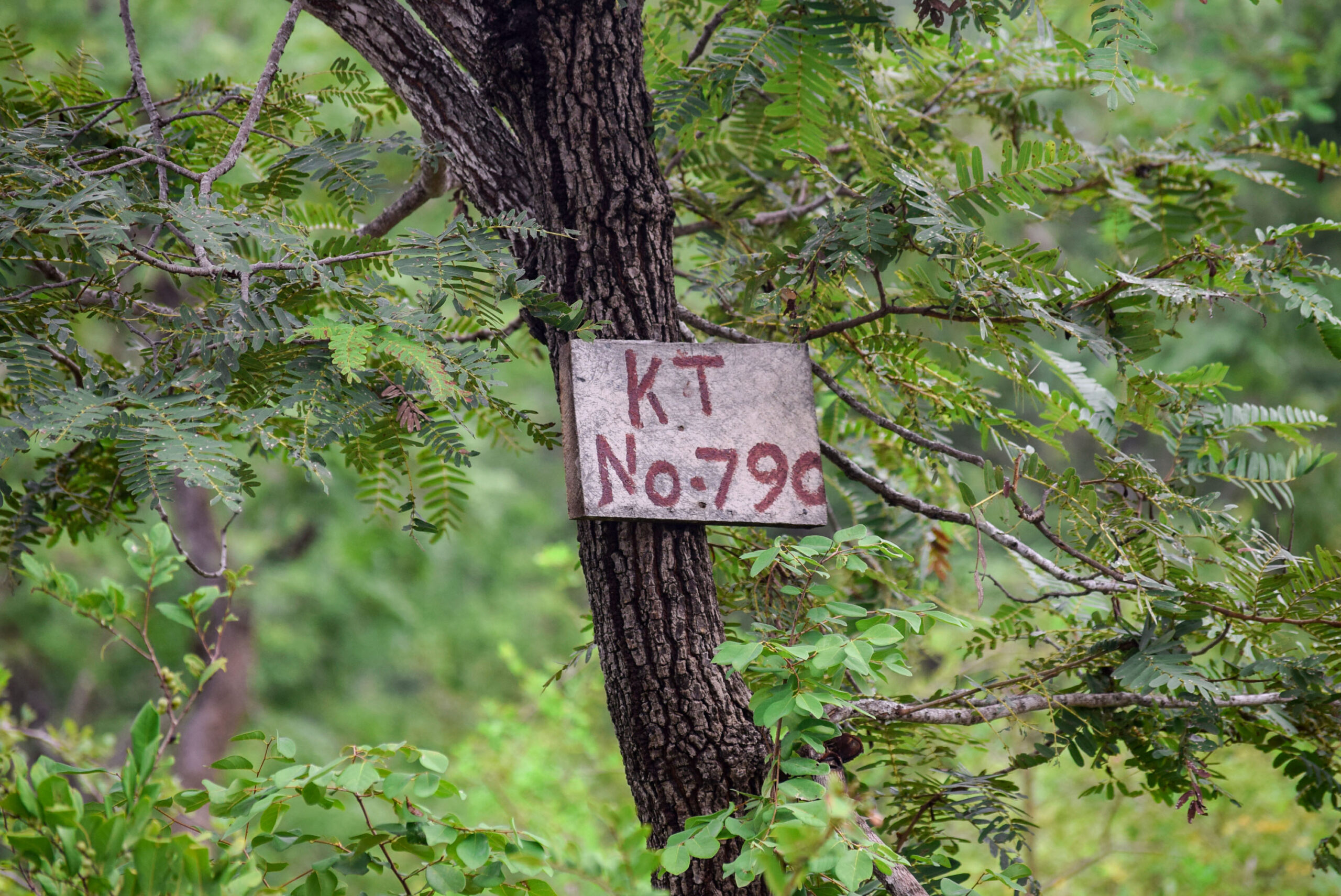
Tagged trees for carbon measurements
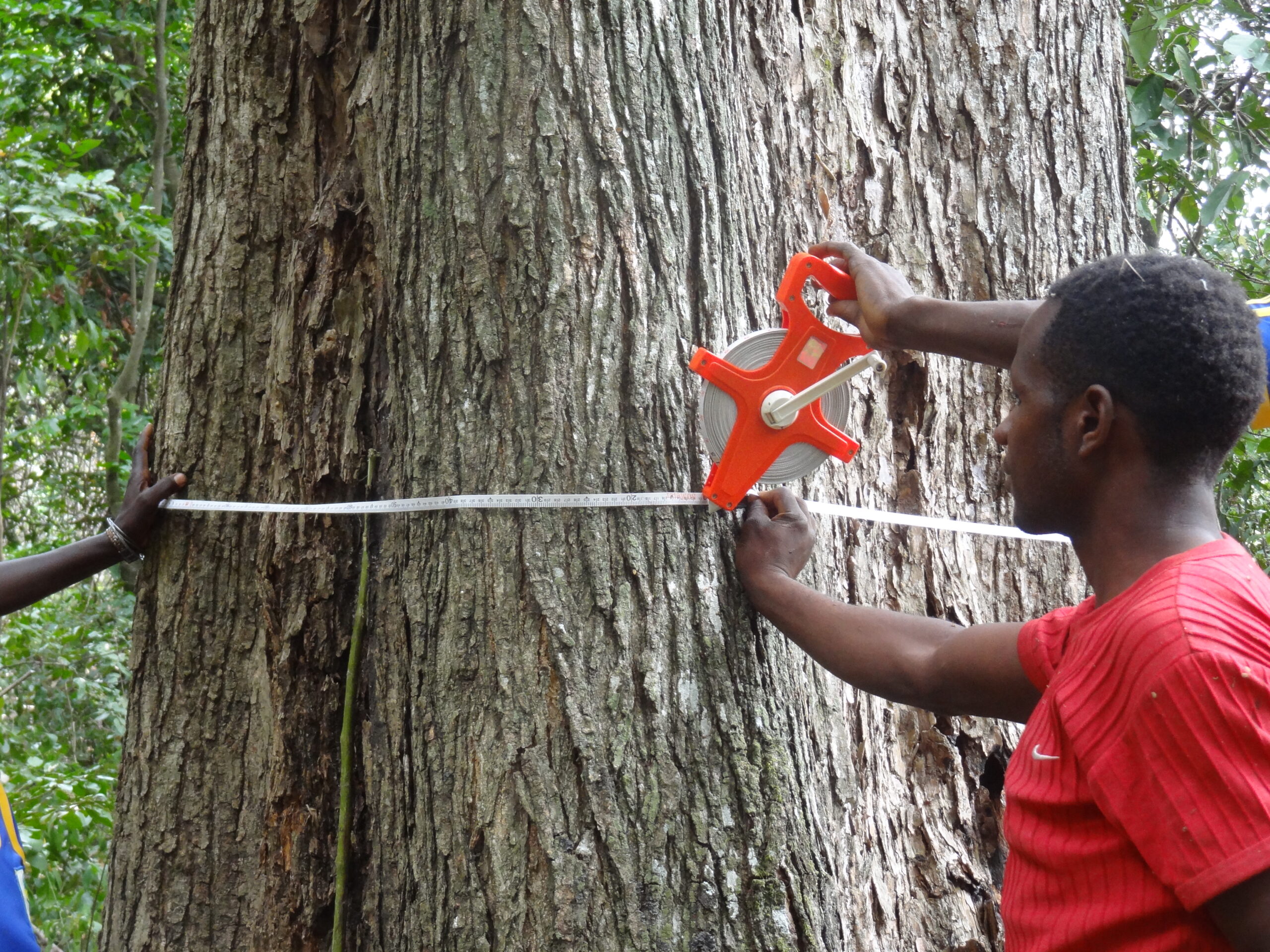
Community-led tree measurements
Project Timeline
Since 2012, the project has evolved from a donor-funded REDD+ initiative under TFCG and MJUMITA into a community-driven carbon program managed by Village Climate Solutions Limited (VCSL).

Following a verification gap between 2016 and 2022, the 2013-2022 vintages weren't verified. VCSL revived the project, restored verification systems, and is now delivering consistent carbon credit issuance.
(2012–2015) Donor funded project under TFCG and MJUMITA
2012
Project Start
1st performance-based payments to Lindi Communities
2015
Verra Registration
First Verification (2012 vintage)
(2016–2022) Funding, verification and issuance gap for 2013-2022 vintages
2016–2022
Verification Gap
(2022) Village Climate Solutions Limited (VCSL) established
2022
VCSL Started
(2022–2025) VCSL revived the project and completed verifications
2025
Second & Third Verification
(2026) Fourth verification in progress
2026
Fourth Verification
VCSL’s Verified Climate Impact by Vintage
Cumulative Verified Emission Reduction (tCO₂e) – June 2025
Total Emission Reduction
0
7% toward lifetime target
Buffer Pool Allocation
0
6% toward lifetime target
Tradable Verified Carbon Units (VCUs)
0
7% toward lifetime target
Progress Against Tradable Verified Carbon Units (tCO₂e)
Retired
0
4% of the tradable
Available for sale today
0
3% of the tradable VCUs
Under Verification Approval
0
59% of the tradable VCUs
Verification Pending
0
34% of the tradable VCUs
+ View full vintage table
Vintage period Est. Buffer Est. Tradable Est. Total Actual Buffer Actual Tradable Actual Total Status
20123,72536,17139,8963,72536,17139,896Retired
20132,3791,5903,9692,3791,5903,969Verified
20142,3241,4853,8092,3241,4853,809Verified
20156,7086,24812,9566,7086,24812,956Verified
201611,80310,99522,79811,80310,99522,798Verified
20178,4347,84416,2788,4347,84416,278Verified
2018000000Verified
2019000000Verified
2020000000Verified
2021000000Verified
20224,87224,28829,1608,64952,12560,774Under Verification Approval
202332,023159,892191,91558,432354,931413,363Under Verification Approval
202451,352256,079307,43133,329198,981232,310Under Verification Approval
202579,752397,037476,78961,898348,694410,592Verification Pending
2026–20642,872,23414,256,07317,128,307N/AN/AN/AN/A
Total 3,075,606 15,157,702 18,233,308 197,681 1,019,064 1,216,745
Explore our vintage and issuance details on the Verra Registry (ID 1325)
View Village Climate Solutions Project on Verra Registry
Adaptation Benefits
Beyond emission reductions, forest protection strengthens climate resilience for both ecosystems and communities by maintaining critical ecological functions and supporting sustainable livelihoods.
🌡️ Microclimate Stabilization
Forest conservation helps regulate local temperatures and reduces climate extremes.
💧 Water Catchment Protection
Protects key water sources and maintains hydrological functions across the landscape.
🌿 Ecosystem Protection
Reduces pressure on vulnerable ecosystems and maintains biodiversity.
👨‍🌾 Livelihood Support
Supports sustainable livelihoods and reduces dependence on forest conversion.
🌾 Agricultural Productivity
Agricultural extension services improve productivity on existing farmland, reducing expansion pressure.
Together, these benefits enhance long-term resilience while reinforcing the sustainability of emission reductions.