The Problem
Smallholder slash-and-burn agriculture accelerates deforestation, threatening forests, biodiversity, and livelihoods across Tanzania
Rapid Forest Loss
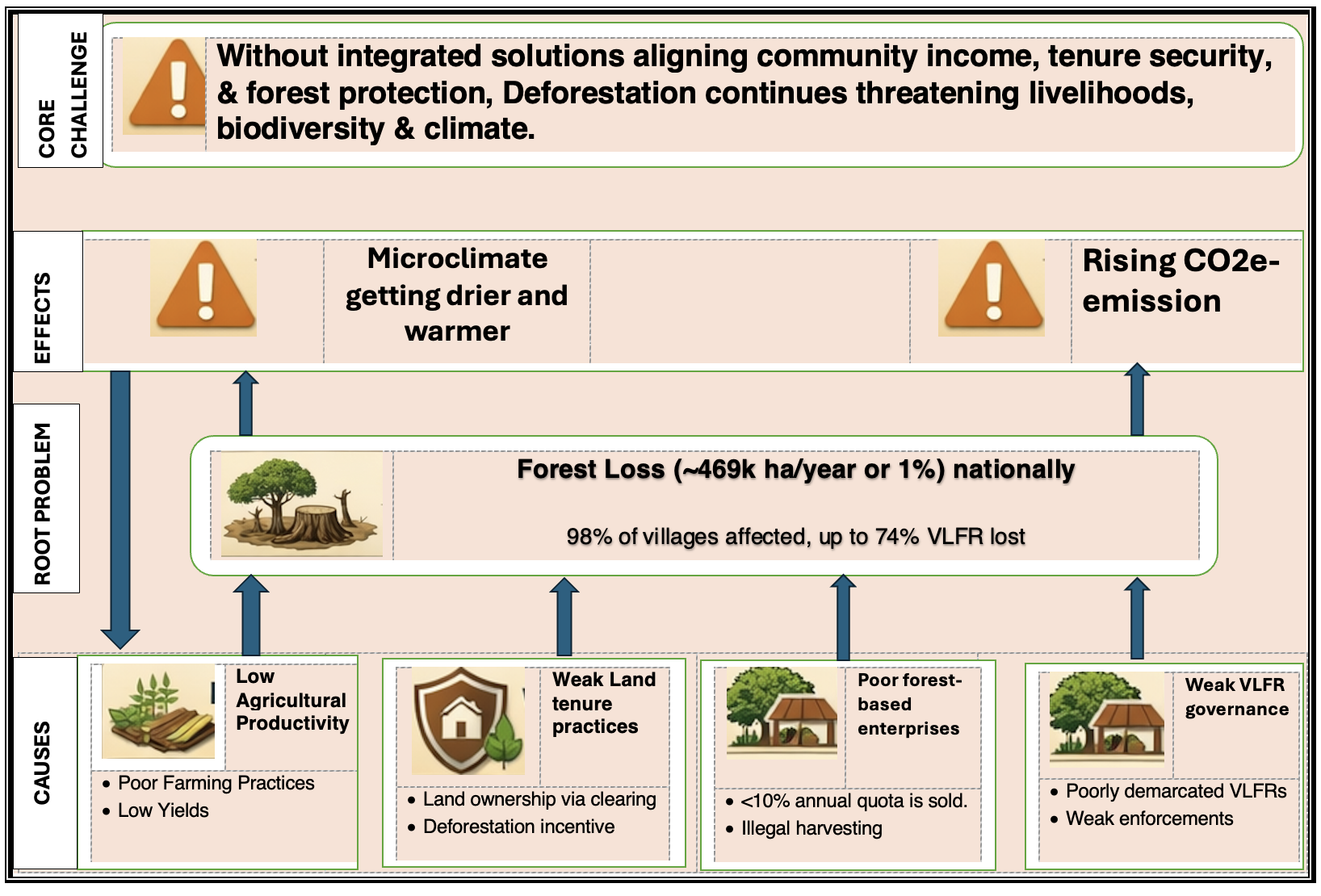
Tanzania is losing forests at an alarming rate, rising from 372,000 ha/year (2010–2015) to 469,000 ha/year (2015–2020), about 1% annual forest loss, and resulting into over 43.7 million tCO₂e emissions annually
Scale of Forest Loss in VCSL’s Project Area
In VCSL’s project area, 98% of villages experienced forest loss between 2016–2022. Over half lost more than 50 hectares, with extreme cases like Ngumbu village (Liwale district) losing up to 74% of forest reserves.
Agriculture as the Primary Driver of Deforestation
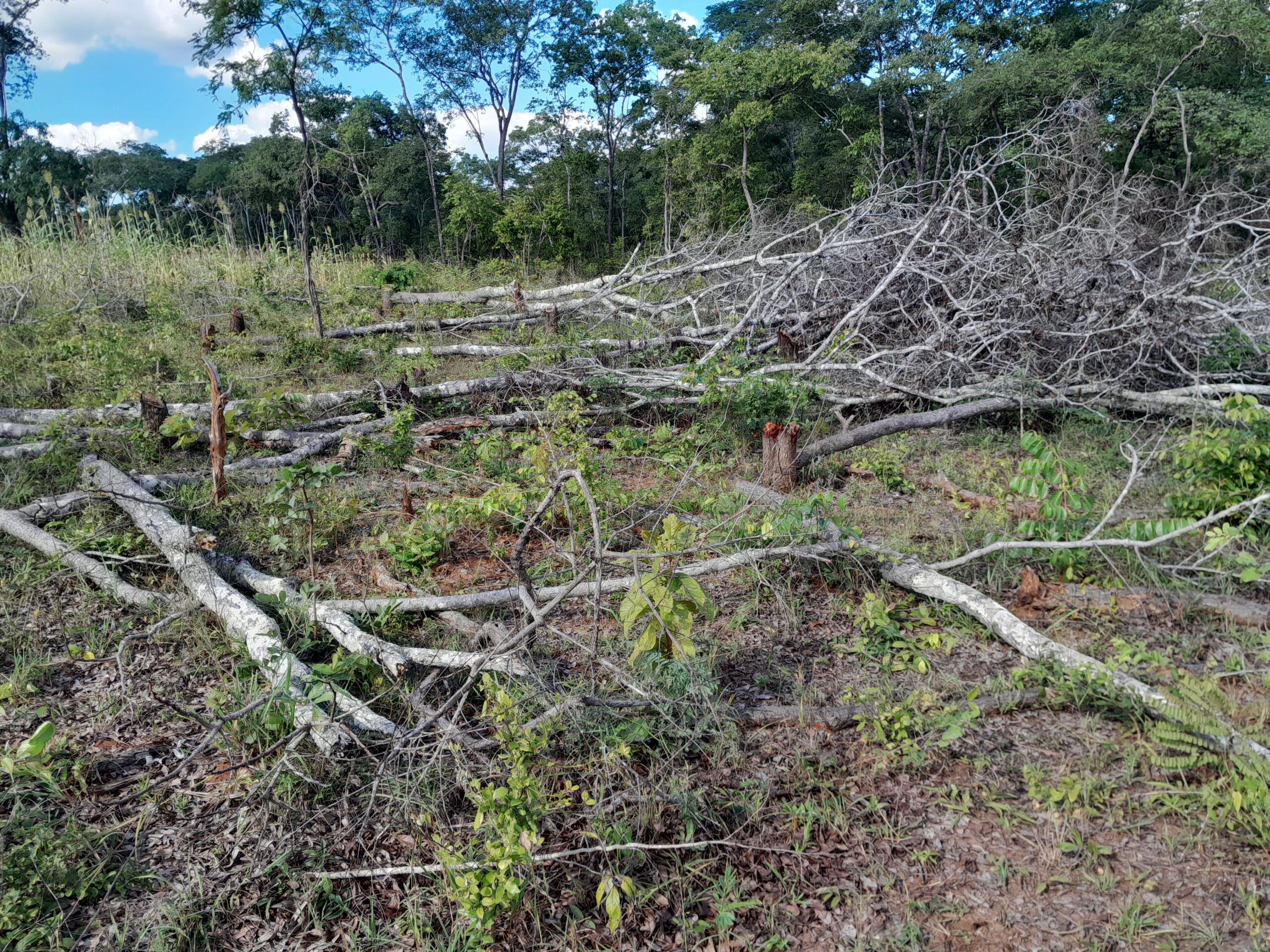
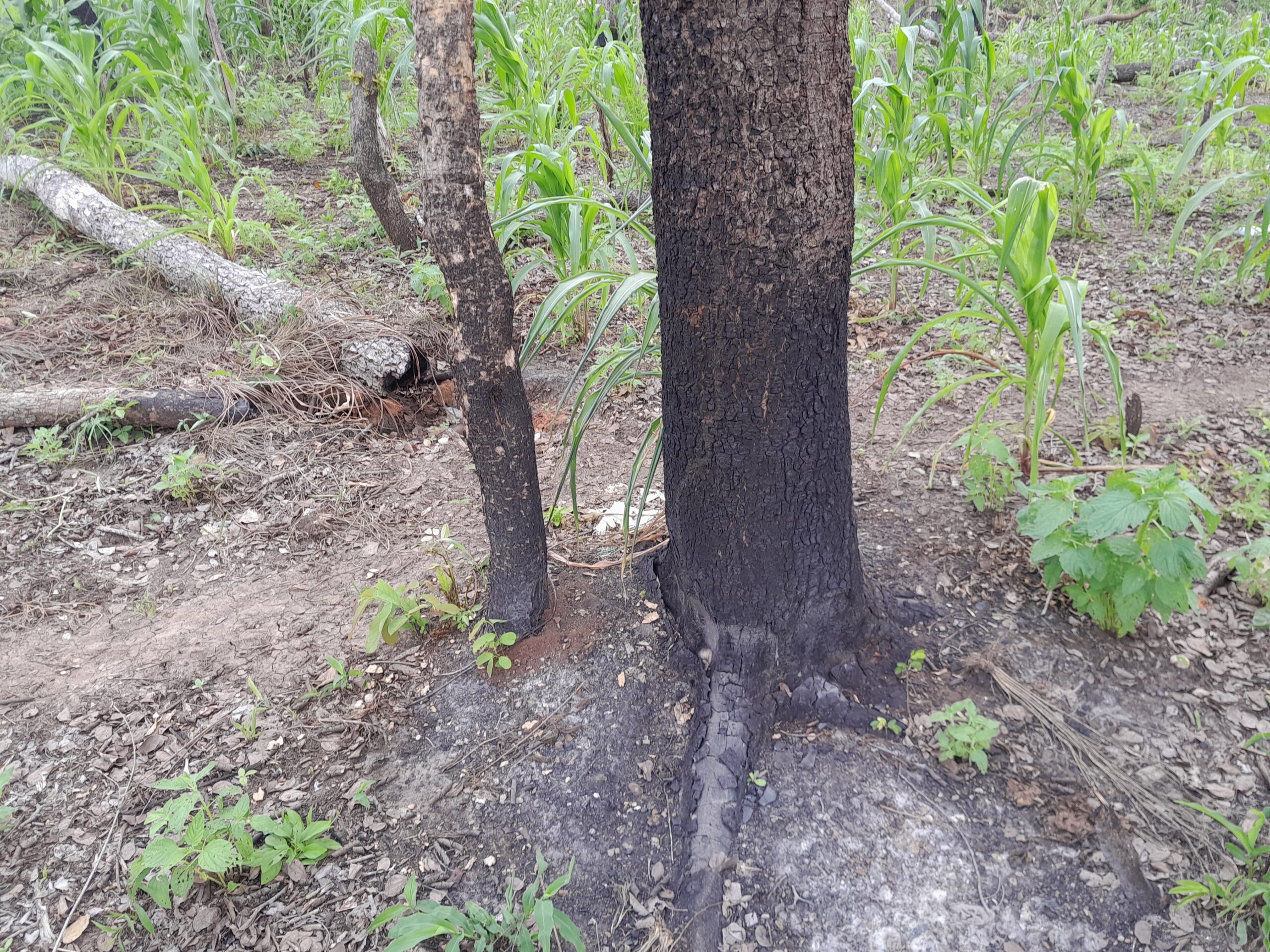
Deforestation is overwhelmingly driven by smallholder agriculture. Over 95% of forest loss results from slash-and-burn expansion into village forests.
In 2022–2023, 83% of cleared land in VCSL’s Project Area was used for sesame and maize cultivation. Most deforestation agents face structural livelihood constraints, 96% lack secondary education, and many are older than the national average.
Low Agricultural Productivity
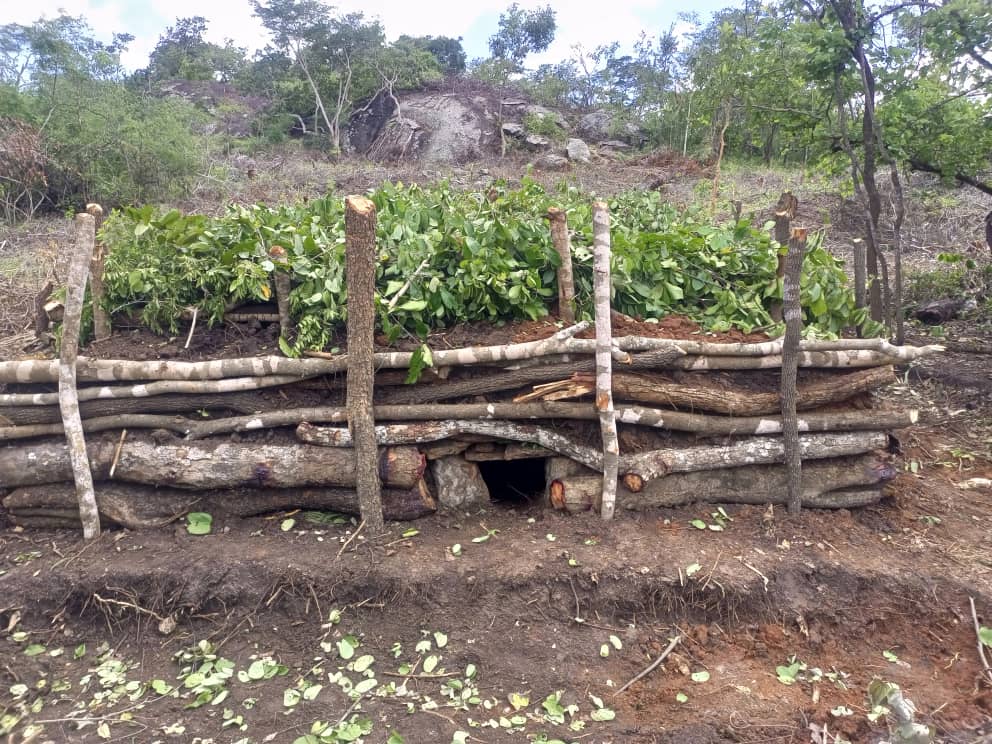
Farmers in VCSL’s Project Area, have limited access to effective extension services and commonly apply sub-optimal agronomic practices. These include poor land preparation, low-quality tools, weak seed selection and spacing, and inadequate management of weeds, pests, and diseases.
Post-harvest handling is also weak, reducing yields and returns. As a result, productivity remains low, reinforcing the need to expand farmland into forest areas.
Structural land-use pressures
Land tenure systems reinforce deforestation, as forest clearing is often used to establish land ownership. Combined with slash-and-burn practices, this creates persistent pressure on forests.
Weak Forest Governance
Village Land Forest Reserves are widely established but remain underfunded, poorly demarcated, and weakly enforced. This allows continued encroachment and fragmentation despite formal protection.
Market & Incentive Constraints in Forest Use
Sustainable forest enterprises, including timber and charcoal, face significant market and governance constraints. Villages often harvest less than 10% of their approved annual quotas.
At the same time, illegal harvesting remains widespread, undermining regulated systems and reducing the competitiveness of sustainable production. As a result, returns from sustainable forest use remain low and unreliable, providing limited incentives for long-term forest management.
Limits of Sustainable Timber and charcoal Revenues
Even where sustainable forest management generates significant income, it does not guarantee forest protection.
For example, Nanjirinji A, part of an FSC group certification scheme supported by the Mpingo Conservation and Development Initiative, earned up to $90,000 annually from sustainable timber in 2017. Despite this, the village lost 6,646 ha (10%) of its forest reserve between 2016 and 2022 due to agricultural encroachment.
This highlights a critical limitation: revenue from sustainable timber and charcoal alone is insufficient to counter broader land-use pressures.
Leakage and Systemic Gaps
Even where sustainable forest use generates revenue, deforestation can continue elsewhere within the same landscape. This leakage occurs because underlying drivers—especially agricultural expansion, remain unaddressed.
Short-term donor support can fund complementary activities, but without long-term, performance-based incentives, these efforts are not sustained at scale. As a result, conservation gains are often offset by continued forest loss.
The Core Challenge
Without aligning community income, land tenure systems, and forest conservation, deforestation will continue—threatening livelihoods, biodiversity, and climate stability.